lundi 21 septembre 2015

Dental Assistant


Admit it: You think every scrub-wearing worker in the dentist’s office is either a dentist or dental hygienist. Some of them are, but some of the other professionals performing integral tasks in running the office and facilitating care are actually dental assistants. And what do they do?

The short list of their duties includes preparing patients for treatments and teeth cleanings, plus sterilizing instruments. They often assist dentists during procedures by using suction equipment to clear patients’ mouths. Dental assistants might also process oral X-rays and help maintain patient records. Depending on their licensing and certification, dental assistants might help with fluoride and sealant applications and polishing teeth and dentures.

According to the Bureau of Labor Statistics, there should be more than 74,000 new openings for dental assistants up to the year 2022. That amounts to nearly 24.5 percent employment growth, which is much faster than the average for all professions. There are several reasons for the increased openings, including the fact that current generations take better care of their teeth than either their parents or their grandparents, and they regularly visit a dental office. Expanded health insurance coverage has also led to more patients, which should drive the demand for dental assistants in dentists’ offices and outpatient care centers.

WHY IS ASEPSIS SO IMPORTANT IN DENTAL IMPLANTOLOGY?


The main task of every good dentist is to have an opportunity to assist more of those in need.  In practice, this means that top-ranked specialists in the modern high-tech equipped office should pay much attention   to aseptic and antiseptic of the equipment, materials and department. Why is it so important?  The fact is that the flow of patients is a continuous exchange of microflora between a doctor and a patient, between a patient and indoor air, surfaces and tools. Such exchange promotes the transfer of infectious organisms and breach of sterility, but it is not acceptable in surgical treatment and it must be regulated with certain mandatory actions.

samedi 19 septembre 2015

Dental Implants - Replacing Missing Teeth

If one or more of your teeth are missing, there are a number of ways to replace them. An alternative to bridges, partials or complete dentures may be dental implants. Implants are used to replace missing roots and support artificial replacement teeth. They are comfortable and look like natural teeth.
                                                                                     
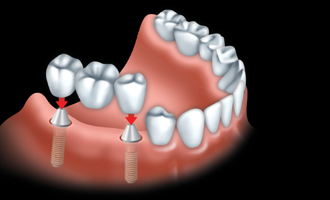
A fixed bridge is anchored to dental implants to replace all teeth

What are dental implants?

A dental implant is an artificial root made of titanium metal. It is inserted into the jawbone to replace the root of the natural tooth. An artificial replacement tooth is attached to the implant. The implant acts as an anchor to hold the replacement tooth in place.

Who does this procedure?

If you are having an implant, your dentist may refer you to a dental specialist who has further training in this area. Specialists who place implants are periodontists or oral and maxillofacial surgeons, also called oral surgeons. Specialists who place crowns, bridges and dentures on implants are called prosthodontists.

TYPES OF DENTAL IMPLANTS

1 Endosteal (in the bone): This is the most commonly used type of implant. The various types include screws, cylinders or blades surgically placed into the jawbone. Each implant holds one or more prosthetic teeth. This type of implant is generally used as an alternative for patients with bridges or removable dentures.

2 Subperiosteal (on the bone): These are placed on top of the jaw with the metal framework's posts protruding through the gum to hold the prosthesis. These types of implants are used for patients who are unable to wear conventional dentures and who have minimal bone height.

Before dental implant
After dental implant


ARE YOU A CANDIDATE FOR DENTAL IMPLANTS?

The ideal candidate for a dental implant is in good general and oral health. Adequate bone in your jaw is needed to support the implant, and the best candidates have healthy gum tissues that are free of periodontal disease.

Dental implants are intimately connected with the gum tissues and underlying bone in the mouth. Since periodontists are the dental experts who specialize in precisely these areas, they are ideal members of your dental implant team. Not only do periodontists have experience working with other dental professionals, they also have the special knowledge, training and facilities that you need to have teeth that look and feel just like your own. Your dentist and periodontist will work together to make your dreams come true.

dental implant surgery

A dental implant (also known as an endosseous implant or fixture) is a surgical component that interfaces with the bone of the jaw or skull to support a dental prosthesis such as a crown, bridge, denture, facial prosthesis or to act as an orthodontic anchor. The basis for modern dental implants is a biologic process called osseointegration where materials, such as titanium, form an intimate bond to bone. The implant fixture is first placed, so that it is likely to osseointegrate, then a dental prosthetic is added. A variable amount of healing time is required for osseointegration before either the dental prosthetic (a tooth, bridge or denture) is attached to the implant or an abutment is placed which will hold a dental prosthetic.

Success or failure of implants depends on the health of the person receiving it, drugs which impact the chances of osseointegration and the health of the tissues in the mouth. The amount of stress that will be put on the implant and fixture during normal function is also evaluated. Planning the position and number of implants is key to the long-term health of the prosthetic since biomechanical forces created during chewing can be significant. The position of implants is determined by the position and angle of adjacent teeth, lab simulations or by using computed tomography with CAD/CAM simulations and surgical guides called stents. The prerequisites to long-term success of osseointegrated dental implants are healthy bone and gingiva. Since both can atrophy after tooth extraction pre-prosthetic procedures, such as sinus lifts or gingival grafts, are sometimes required to recreate ideal bone and gingiva.

Dental Implant


Dental Implants have changed the face of dentistry over the last 25 years.What are dental implants? What is the history of dental implants? And how are they used to replace missing teeth? This section will give you an overview of the topic of dental implants, to be followed by more detail in additional sections.

As with most treatment procedures in dentistry today, dental implants not only involve scientific discovery, research and understanding, but also application in clinical practice. The practice of implant dentistry requires expertise in planning, surgery and tooth restoration; it is as much about art and experience as it is about science. This site will help provide you with the knowledge you need to make informed choices in consultation with your dental health professionals.

vendredi 11 septembre 2015

Cancer trial of drug combination yields 'spectacular' results


Terminally ill cancer patients could be “effectively cured” of the disease using a powerful new combination of drugs described by scientists as heralding a once-in-a-generation advance in treatment.
A British-led trial brought “spectacular” results with more than half of patients with advanced melanoma seeing tumours shrink or brought under control using the drugs.


Prof Roy Herbst, chief of medical oncology at Yale Cancer Centre in the US, said the treatment, which uses the body’s immune system to attack cancerous cells, could potentially replace chemotherapy as the standard cancer treatment within five years.
“I think we are seeing a paradigm shift in the way oncology is being treated,” he said. “The potential for long-term survival, effective cure, is definitely there.”


Twitter Delicious Facebook Digg Stumbleupon Favorites More